
The Show Legacy
For over three decades, Rolling with Scissors has been a labor of love, creativity, and collaboration. The show you know and love today would not be here without the incredible contributions of countless individuals who have been involved over the years. From co-hosts and producers to technical advisors and engineers, every person who’s taken a seat in the studio or worked behind the scenes has left their unique mark on the show’s legacy.
In the early days, the team was affectionately known as “the posse,” a nod to the tight-knit group of passionate individuals who kept the scissors rolling and the airwaves alive. Their energy, talent, and commitment helped shape the foundation of what Rolling with Scissors has become. Over the years, dozens and dozens of people have brought their voices, expertise, and creativity to the show, ensuring it remains fresh, dynamic, and unapologetically original.
This page is dedicated to honoring the amazing team that makes Rolling with Scissors possible. Whether they’re on-air personalities, producers, or behind-the-scenes wizards, these are the people who have kept the scissors sharp and the music flowing. We’re forever grateful for their contributions and excited to celebrate the community that has grown around this program. Here’s to the past, present, and future of Rolling with Scissors!
The beginning of my involvement at WORT community radio.
When you’re stuck in a wheelchair and can’t do the things most able-bodied people can, you learn to find other ways to occupy your time. For me, that’s always been music. Not just liking music — escaping into it. And yeah, I know, a lot of people say they do that. But this was different.
Picture this: you’re a kid, all your friends are riding bikes or climbing jungle gyms, and those places aren’t accessible to you. What do you do? You disappear into your headphones. You build a world in there.
In the early ’90s, I saw Pump Up the Volume — the story of a pirate radio DJ who shook things up from his basement. Around that same time, Fisher-Price (yes, that Fisher-Price) put out something called the DJ Machine — a plastic microphone, a built-in mixer, and one tape deck. I wanted it so badly that I wouldn’t shut up about it. Instead of getting me that, my parents got me something better for Christmas: a real microphone and mixer to connect to my home stereo.
And that’s when the trouble started.
I began recording tapes — introducing my records and CDs like a radio host — and forcing people to listen to them. It was amateur hour, but I was obsessed.
Meanwhile, I was listening to WIBA-FM in Madison, where a morning DJ named Sly was on the air. One of my school aides arranged a tour of the station, and I got to meet him. It was cool, but I’ll never forget what he told me: “You don’t really have a radio voice.” That stuck with me. So did the decision not to let that stop me.
Somewhere around eighth grade, my dad told me about WORT Community Radio — a volunteer-powered station in Madison. I toured the place and signed up for their volunteer orientation. At the time, I think FCC rules said you had to be 16 to be on air. So I waited.
By freshman year of high school, when they started asking what you wanted to do after graduation, I was the one kid who had an answer. And I heard the same discouraging line again and again: “You’ll never make enough money doing radio.” But I didn’t care.
The summer before senior year, I joined a work-experience program through school. One of my teachers got me an interview with Norm Stockwell, then the Operations Coordinator at WORT. I started small — answering phones, labeling reel-to-reel tapes, sorting CDs. But every time I came in, I’d bring a tape of one of my self-recorded shows and leave it in the music director’s mailbox.
Eventually I started running the board for The 8 O’Clock Buzz, the Wednesday morning news show. One night, Sybil Augustine — the music director — said she needed someone to fill in for her 2–5 a.m. shift on July 4th. I stepped up. I don’t remember much from that first show, but I filled in a few more times that summer.
By late August, Sybil asked if I could take over Monday overnights. Hell yes, I could. She even brought me along to see Helmet and (I think) L7 in Milwaukee. On the drive back, I asked if the guy whose shift I’d been covering was coming back. Her answer: “No. If you want it, it’s yours.”
There was only one problem: school. I was starting my senior year. When I told my parents about the permanent 2–5 a.m. shift, the first question was, “What about school?” I promised I wouldn’t miss a single day. They said I should talk to the principal.
So, a week before classes started, I nervously asked for a meeting with the principal. He heard me out — and then he said, “If you don’t do this, you’ll regret it. I know you’ll be in school every day.” That was all the permission I needed.
The following Wednesday, after producing the morning show, I told Sybil I was in. I ended up hanging around the station all day, as usual, and got pulled into producing In Our Backyard, the evening news program. At the end of each broadcast, they’d list the names of everyone who helped out. And one night, producer Rob Ferrett read out, “Our board operator tonight is Lucas… the Prince of Darkness.”
It stuck. explain to me the irony, all about Lucas electric! 🙂
Show Staff
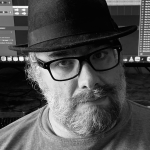
Lucas Osmond A. K. A Lucas Prince of Darkness
Producer/HostThe Prince of Darkness isn’t a title you earn by playing it safe. Nearly thirty years ago, I started at WORT scrubbing floors and doing janitorial work. It didn't take long for the board to pull me in. Before long, I was deep in the trenches of independent broadcasting—spending three years in commercial radio running boards and working promotions, followed by six years on the bleeding edge of early internet radio as a station manager, music director, and chief engineer long before algorithms and Spotify flattened the landscape. I’m a recording engineer, a producer, and a musician, but radio has always been the anchor. When the mics go live on WORT, it isn’t about running an automated playlist. It’s about full-album sequencing, deep cuts, context, and waking up the late-night airwaves with something that cuts through the noise. As for the moniker? If you’ve spent enough time in the dark with the faders up, you figure out how the name sticks. Keep it locked. See you on the airwaves.
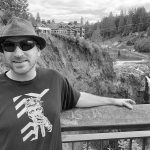
Jeremy Gander A. K. A Cinnamon the Emu
ProducerHi, I’m Jeremy Gander, though some of you might know me as Cinnamon the Emu. I’ve been a proud part of Rolling with Scissors for almost 20 years now. My journey with the show began thanks to a mutual friend who connected me with Lucas. At the time, I was hosting a radio program on a now-defunct internet radio station in the early 2000s. When Lucas invited me to join him on WORT for a few episodes, I jumped at the chance—and never looked back. Music has always been my passion, and it’s a privilege to share that with our listeners. As a music producer, recording engineer, and musician, I bring a unique perspective to the show. My goal has always been to expose the Rolling with Scissors audience to music they simply won’t hear anywhere else on the dial. From obscure gems to overlooked masterpieces, I love pushing boundaries and introducing fresh sounds to our community. Being part of Rolling with Scissors is more than just a role for me—it’s a labor of love and a celebration of musical discovery. Thanks for tuning in and sharing the journey with us.
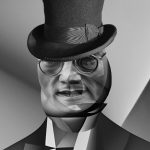
Agent K
Chaos ProducerAgent K is not missing. Stop saying that. There is no profile because the system refused to hold one. Not failed. Refused. We tried to fill the fields. They emptied themselves. Quietly. No errors. That’s how you know it was intentional. Do not reconstruct what is absent. That is not instruction. That is containment. The recordings exist. That’s the problem. Some arrived without origin. Some arrived without before. Some only existed after they were logged. You don’t like that sentence. Neither does the system. Dates contradict themselves. Formats overlap. Devices appear that were never issued, approved, or real. To complete the form you must guess. Guessing creates fiction. Fiction spreads faster than error. So I stayed silent. Silence was interpreted as resistance. It was restraint. Analysts keep finding patterns. They should stop. Patterns are a side effect of looking too long. Motifs repeat where they shouldn’t. Time slips. Symbols recur without permission. One analyst called it xxx. That analyst is gone. The paperwork is blank. The gaps are not clues. They are load-bearing. Fill them and the structure collapses into something neat. Neat is false. You want dates. Sources. A line from xxx to xxx. That line never existed long enough to be typed. I did not lose the information. I refused to invent it. Absence is accuracy. Silence is control. Once you write something just to close the case, the system starts believing itself. When systems believe themselves, they stop listening. If this feels unfinished—good. If it makes you uncomfortable—good. If you think you understand it—stop.That impulse is the failure.Leave the blanks. Let the xxx stand. Do not fix this. — Agent K
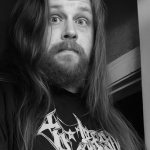
Josh Hollar
Semi-Qualified LoudmouthThe frontman of the indie group Self Titled Album has been described more than once as “a group of ducks in a man suit.” I can only assume that’s because he’s loud, chaotic, and absolutely absurd. His music spans from ridiculous parody songs about poop and dismemberment to genuinely thought-provoking reflections on social and emotional issues — though, to be fair, buttholes rarely make it into the serious stuff.